



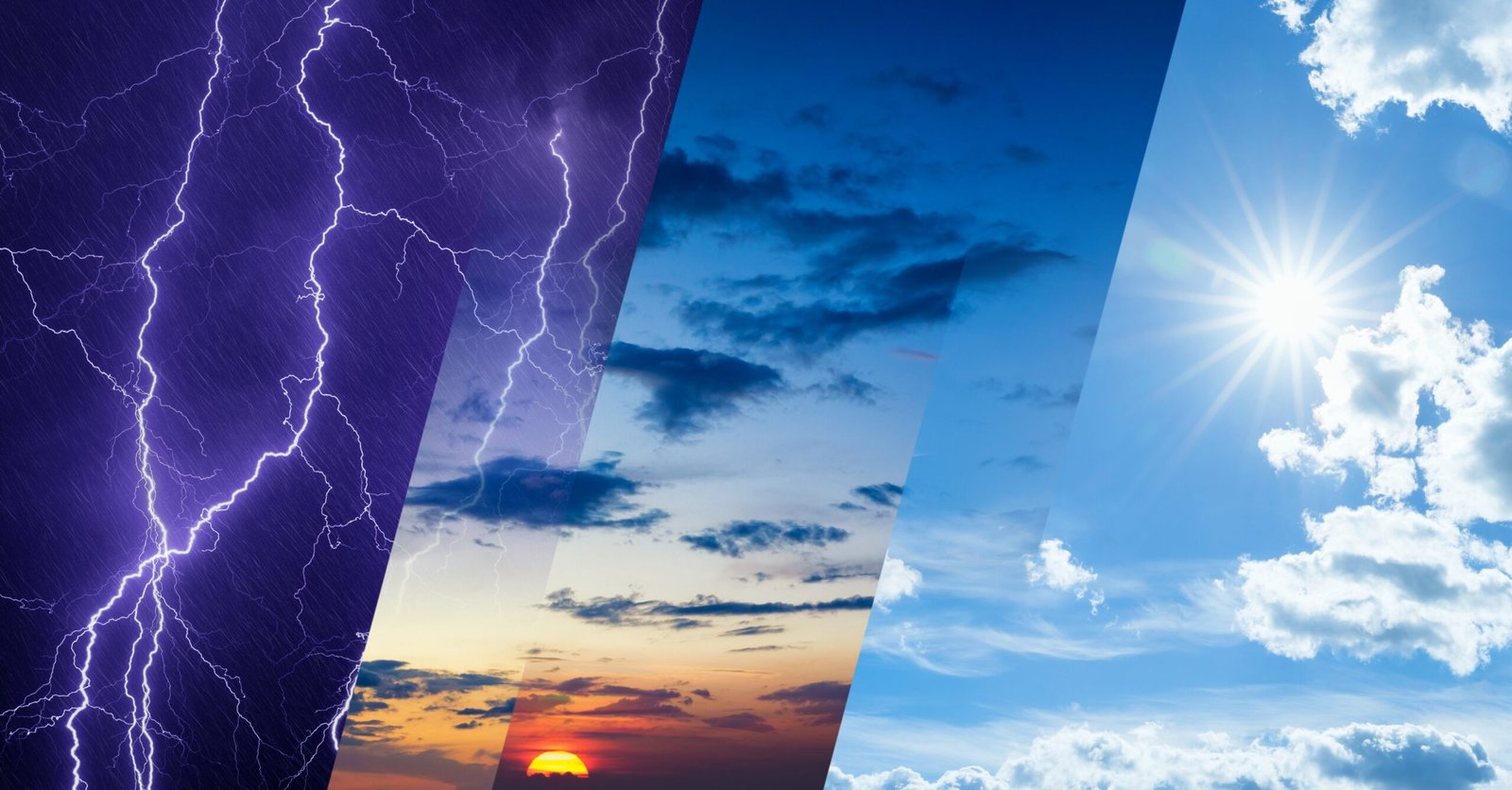
Weather is one of the most important and fascinating aspects of our planet. It influences every part of our lives, from the clothes we wear to the crops that grow in our fields. The term “weather” refers to the condition of the atmosphere at a particular place and time, including temperature, humidity, rainfall, wind, and other elements. Every day, we experience some form of weather, whether it is a bright sunny day, a cold winter morning, or a rainy afternoon. Understanding weather helps us plan our daily activities and prepares us to face natural changes in the environment.
Weather is the result of complex interactions between the sun, the atmosphere, the earth’s surface, and water bodies like oceans and lakes. The sun plays the most vital role because it provides the energy that drives weather patterns. When sunlight reaches the earth, some areas receive more heat than others. For example, regions near the equator get more direct sunlight, making them warmer, while the poles receive less sunlight and remain colder. This difference in temperature creates air movements, which we feel as wind. The movement of air, combined with moisture in the atmosphere, results in various weather conditions.
Rain is one of the most common and essential forms of weather. It occurs when water vapor in the air cools and condenses into tiny droplets that fall to the ground. Rain is necessary for plants, animals, and humans. Without it, rivers would dry up, crops would fail, and life would be impossible. However, too much rain can also cause problems such as floods, landslides, and property damage. Similarly, when there is little or no rain for a long time, droughts can occur, leading to water shortages and agricultural losses. These extremes show that weather can be both a blessing and a challenge.
Another important element of weather is temperature. Temperature measures how hot or cold the atmosphere is at a particular time. It affects everything around us, from the clothes we wear to the energy we use. People in colder regions rely on heating systems to stay warm, while those in hot areas use air conditioning to cool down. Extreme temperatures can also affect human health. Very high temperatures may cause heat strokes, while extremely low temperatures can lead to frostbite and hypothermia. Animals and plants have also adapted to survive in different temperature conditions.
Wind is another key factor that shapes weather. It is the movement of air from high-pressure areas to low-pressure areas. Gentle winds bring a pleasant breeze, but strong winds can be dangerous. Hurricanes, cyclones, and tornadoes are examples of severe wind storms that can destroy homes, trees, and power lines. Despite their destructive power, winds also play a positive role in nature. They help spread seeds, move clouds, and even generate energy through wind turbines.
Clouds are often the most visible sign of weather. They are formed when water vapor condenses into tiny droplets or ice crystals. Different types of clouds indicate different weather conditions. For example, white fluffy clouds usually mean fair weather, while dark thick clouds often signal rain or storms. Observing clouds is one of the oldest ways humans have predicted weather before modern technology made forecasting possible.
Today, weather forecasting has become an essential part of our daily lives. Meteorologists use satellites, radar, and computer models to study and predict weather patterns. Accurate weather forecasts help farmers plan their crops, airlines schedule flights, and people prepare for outdoor events. Early warnings about storms, floods, or heatwaves can save lives and reduce damage to property. This shows how understanding weather has become more than just an interest; it is a necessity for survival and progress.
Weather also affects our mood and behavior. A sunny day can make people feel happy and energetic, while dark cloudy days may cause sadness or laziness. Many cultures and traditions around the world are deeply connected to weather and seasons. Festivals, clothing styles, and even diets change according to the weather conditions of a region. For instance, winter brings warm clothing and hot food, while summer invites cool drinks and light attire.
In conclusion, weather is a powerful force that shapes the world in countless ways. It controls the rhythm of nature, affects our emotions, and determines how we live our daily lives. By studying and understanding weather, we can adapt better to its changes and protect ourselves from its extremes. Weather is not just a topic for scientists; it is a shared experience that connects all living beings on Earth. Every sunrise, every raindrop, and every breeze reminds us that we live in a world of constant motion and endless beauty.



Comments are closed